
Work from 08:00 until 20:00
All days. No weekends! Call now!
" />
How to properly store preservation for winter
                 

How to properly store preservation for winter

  • Icon Storage
  • Icon conditions and mistakes

Products for autoclaving:

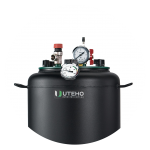
Autoclave "A16 electro" (Universal)

Autoclave "A16 electro" (Universal)
10300 UAH
More details
Buy

Autoclave sealing lid SKO 82 mm (50 pcs)

Autoclave sealing lid SKO 82 mm (50 pcs)
300 UAH
More details
Buy

Twist-off lid for autoclave 82 mm (50pcs)

Twist-off lid for autoclave 82 mm (50pcs)
420 UAH
More details
Buy

Autoclave "A16 electro" (Universal)

Autoclave "A16 electro" (Universal)
10300 UAH
More details
Buy

Clamps for SKO lids – set of 10 pcs.

Clamps for SKO lids – set of 10 pcs.
400 UAH
More details
Buy

Twist-off lid for autoclave 82 mm (50pcs)

Twist-off lid for autoclave 82 mm (50pcs)
420 UAH
More details
Buy

Watch the video about products for the autoclave:

How to properly store homemade preservation

Homemade preservation is not only the correct recipe and sterilization, but also the appropriate storage conditions after preparation. Many are sure that if the preserves are already ready, then they will simply stand for years without any problems. But in practice, even ideally prepared preserves can spoil due to improper storage.

That is why it is important to know not only how to prepare preservation for winter, but also how to properly store stew, vegetables, compotes, jam and other homemade preserves. After all, homemade preservation is a whole system that consists of the correct container, high-quality sterilization and stable storage conditions.

Why even ideal preservation can spoil

Many are sure that if the preservation is already closed, then it will simply stand for years without any problems. But in practice, it is precisely improper storage conditions that most often become the reason why even ideally prepared preserves spoil. Homemade stew, vegetable salads, compotes or jam can lose taste, change color, begin to ferment or even become dangerous for consumption.
Why homemade preservation can spoil

Storage temperature for preservation

Optimal storage conditions for preservation are from +4 to +15°C. It is at this temperature that homemade stew, vegetables, jam and other preserves are stored the longest. But it is no less important to avoid sharp temperature changes. If the jars heat up and cool down, condensation may form on the lids and inside the container. And this already creates favorable conditions for product spoilage. That is why you should not place jars near radiators, the oven, the boiler or leave them on a sunny windowsill. It is also a bad idea to store preserves in kitchen cabinets above the stove.
Storage temperature for homemade preservation

Can preservation be stored in the light

Jars with homemade preservation are better stored in a dark place. Sun rays can accelerate spoilage of products. That is why the ideal place for storage is a basement, pantry, dark cupboard or cool room without access to direct light. The exception is retort pouches. The material of such packaging does not let sun rays through, therefore preserves in an autoclave in retort pouches can be stored even on open shelves.
Can preservation be stored in the light

What air humidity is suitable for storage

Air humidity is no less important. Ideally, if it does not exceed 75%. If the room is too humid, the lids may begin to rust, and mold will appear on the jars or shelves. This is especially relevant for basements and garages. If you notice that the room is often damp, it is worth using an air dehumidifier or at least not placing the jars directly on the floor or close to the wall.
Air humidity for preservation storage

How long stew and other types of preservation are stored

Storage periods differ depending on the type of preserve:
  • meat preserves and stew — up to 2 years;
  • fish preserves — from 1 to 2 years;
  • vegetable salads, lecho, vegetables — from 6 to 18 months;
  • compotes with pits — 6–8 months;
  • jam, preserves and fruits — up to 2 years.
That is why, if you are interested in how long stew is stored, you should focus on a period of up to two years under the condition of proper sterilization and cool storage.
How long stew and other preservation are stored

Why sterilization of preserves is so important

Even ideal storage conditions will not help if sterilization of preserves was carried out incorrectly. It is sterilization that determines approximately 80% of the success of all preservation. Many people still believe that it is enough simply to boil jars in water. But the boiling temperature of water is only 100°C, and this is not enough for the complete destruction of dangerous bacteria, especially botulism spores. That is why sterilization of preserves in an autoclave is considered the safest and most effective method.
Why sterilization of preserves in an autoclave is important

Advantages of autoclaving for homemade preservation

Under pressure, the boiling temperature of water rises to 120°C and more. Thanks to this, it is possible to completely destroy dangerous bacteria and ensure long-term and safe storage of products. For those who regularly make homemade preserves for winter, the autoclave is especially convenient. Preserves in an autoclave are stored longer and more stably, and the result is more predictable.
Advantages of autoclaving for preservation

What mistakes most often spoil preservation

Most often homemade preservation spoils because of:
  • storing jars in warm kitchen cabinets;
  • leaving preservation in the sun;
  • storing on the balcony in winter, where the jars can freeze;
  • too high humidity in the room;
  • using a spoiled product for preservation.
Swelling of the lid is especially dangerous. If the jar has swollen, it категорically cannot be tasted or “reboiled”. Such preservation must be disposed of immediately.
Typical mistakes when storing preservation

How to properly store homemade preservation

For homemade preservation to stand for a long time, inspect the jars regularly. Check whether there is swelling, rust, leakage, cloudiness or mold. For better storage:

  • use an air dehumidifier if the room has high humidity;
  • place jars on shelves or racks, not on the floor;
  • leave a small space between the jars and the wall;
  • do not allow sharp temperature changes;
  • store jars in a dark cool place.

Follow these simple rules — and your preserves for winter, stew, vegetables and jam will remain tasty, safe and aromatic for many months.

Our channel on YouTube

Uteho

Do not forget to subscribe to our channel so as not to miss new interesting videos, get useful tips on autoclaving and learn interesting recipes for the autoclave.