




How to check an autoclave for tightness
 Autoclave instruction
 Safe autoclaving
.png)
Products for safe autoclave operation:


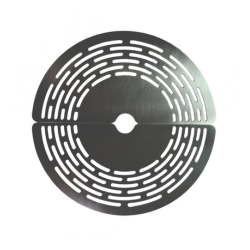
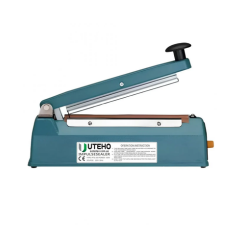
Watch the video about using an autoclave:
Autoclave tightness
Autoclave tightness is one of the most important conditions for safe and effective autoclaving. It is thanks to tightness that the necessary pressure in the autoclave is created inside the container, which allows high temperatures to be reached and products to be properly sterilized.
If the autoclave does not hold pressure or noticeably loses it, this can affect not only the quality of cooking, but also the safety of operating the equipment. That is why every owner should know how an autoclave works, how to use an autoclave and how to check it for tightness if there are suspicions of an air leak.
In this article, we will consider the main reasons for checking, testing methods and the most common places of depressurization.
When should you check an autoclave for tightness?
If the autoclave works steadily, normally builds up and holds pressure, there has been no replacement of components or interference with the structure, additional checks are NOT needed.
However, there are several situations when a tightness test is mandatory.
.png)
The autoclave does not hold pressure
- pressure builds up but quickly decreases;
- a characteristic hissing sound is heard;
- air or steam escaping is noticeable;
.png)
Check after replacing components
- replacement of the pressure gauge, valves, installation of additional accessories;
- any autoclave repair at home.
.png)
After a long break
During this time, the gasket may have lost elasticity, threaded connections may have loosened, and dirt may have remained on the flange, which prevents the lid from fitting tightly.
.png)
Is it necessary to check a new autoclave after purchase?
All UTEHO autoclaves undergo factory testing before being sent to the buyer. Each autoclave is checked for tightness and operability.
However, the first start is recommended to be performed in test mode — without jars or with a minimum amount of containers. This will help you better understand how the autoclave works, master the settings and use it confidently in the future.
.png)
How to check an autoclave for tightness?
- Close the autoclave.
- Pump pressure of 2–3 atmospheres inside.
- Close the ball valve.
- Disconnect the pump or compressor.
- Leave the autoclave for several hours.
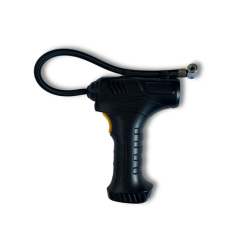
The compressor is connected through the nipple, it allows you to set the required pressure on the digital display and automatically stops pumping after the set value is reached. Thanks to autonomous operation and USB charging, it is especially convenient for autoclave owners.
.png)
What should the test result be?
If the pressure has changed by no more than one division of the pressure gauge, the autoclave is considered tight and ready for operation.
If the readings have noticeably decreased, it is necessary to find the leak point.
.png)
How to find the air leak point?
For this, the solution is applied to all suspicious connection points.
Where soap bubbles form is where the air leak point is located.
.png)
Places of depressurization
- insufficiently tightened nuts;
- damaged gasket;
- flange contamination;
.png)
Threaded connections
- pressure gauge;
- safety valve;
- ball valve;
- thermometer fitting;
- other threaded elements.
.png)
What to do if the problem cannot be found?
Incorrect intervention can lead to damage to components or incorrect operation of the equipment.
In this case, it is better to contact the specialists of the UTEHO service center or technical support. Specialists will help quickly determine the cause and safely eliminate the malfunction.
.png)
Autoclave tightness
A tightness check is a simple procedure that takes a minimum of time, but allows you to avoid many problems during equipment operation.
Understanding how to use an autoclave, how an autoclave works and how to control pressure in an autoclave helps ensure safe autoclaving and obtain a stable result during every cooking process. You can see all of this in action in our video guides.
That is why a tightness check should be part of the correct autoclave instruction for every owner of UTEHO equipment.
31.05.2026



Reviewed by: UTEHO Technical Department Specialists
UTEHO Expert Editorial Team
The UTEHO team develops autoclaves and accessories for home food preservation. All informational articles, guides, and recommendations are tested in real UTEHO autoclaves before publication.
Our content is based on practical experience, technical expertise, recommendations from UTEHO engineers and technologists, as well as feedback from our customers.
UTEHO
Subscribe to our YouTube channel to stay up to date with new videos, practical autoclaving tips, and reliable recipes for home food preservation.