
Work from 08:00 until 20:00
All days. No weekends! Call now!
" />
Which is Better: Autoclave or Freezing?
                 

Which is Better: Autoclave or Freezing?

  • IconComparison of food storage methods
  • Icon Autoclave/Freezer

Products for Autoclaving:
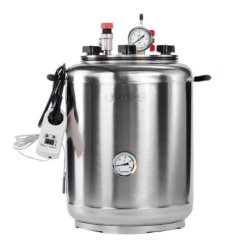
Autoclave "A16 electro" (Universal)

Autoclave "A16 electro" (Universal)
11300 UAH
More details
Buy

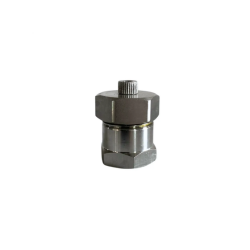
Steam valve

Steam valve
600 UAH
More details
Buy

Autoclave Twist-Off Lid

Autoclave Twist-Off Lid
420 UAH
More details
Buy

Seaming lid SKO 82 mm (50 pcs)

Seaming lid SKO 82 mm (50 pcs)
300 UAH
More details
Buy

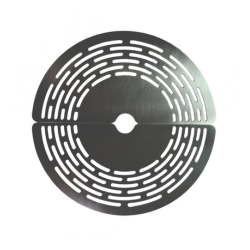
Partitions for jars and retort pouches

Partitions for jars and retort pouches
500 UAH
More details
Buy

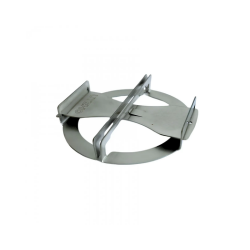
Clamps for SKO lids "for steam" 10 pcs

Clamps for SKO lids
400 UAH
More details
Buy

Comparing Two Methods of Food Storage:

Autoclave or Freezing – What to Choose?

Modern households have plenty of options for food preservation, and the most popular ones are freezing and autoclaving. Both methods are effective and have their pros and cons, but they are fundamentally different approaches to food preservation. In this article, we compare these methods based on key criteria and find out which one is more convenient, economical, and profitable.

Storage Convenience

Frozen foods require constant operation of a freezer. This means additional electricity costs and limited storage space. Canned foods prepared in an autoclave, on the contrary, can be stored anywhere convenient — in a cabinet, basement, pantry, or even just on a shelf. The main requirement is a dark, dry place with moderate temperature. No need for a refrigerator or daily worries. The clear advantage here is with the autoclave.

Shelf Life

Frozen vegetables, meat, or berries can be stored for 3 to 12 months. But after a long time in the freezer, products may lose their taste, texture, or change appearance.
Dishes prepared in an autoclave can be stored for 2–3 years, if sterilization technology is followed, without losing quality, flavor, or aroma. This is truly a reliable way to create long-term reserves. Another advantage goes to the autoclave.

Preparation Time

Here, the clear leader is freezing. It's simple and fast: you just need to pack the food into bags or containers and put them in the freezer. Autoclaving requires more time: ingredient preparation, sterilization, and process control.

Energy Consumption

It might seem that an autoclave consumes a lot of energy. But in reality, it runs only for a few hours. Moreover, gas models do not require electricity at all. A freezer, on the other hand, works nonstop—24/7—and adds up a significant amount to your electricity bill over a year. In the long run, the autoclave is the more economical option.

Equipment Cost

The price for both autoclaves and freezers starts at roughly the same level — from 3500 UAH and up, depending on the model. So this point is a tie. The choice depends on your needs and budget.

Mobility and Transportation

Transporting frozen products is difficult. You need special containers, freezer bags, or equipment — otherwise they spoil quickly. But canned goods, especially in retort pouches, can be taken on the go, mailed, or used in extreme conditions. They are not sensitive to temperature changes and don’t require refrigeration. A huge plus for autoclaving.

Flexibility of Use

The winner here is the freezer. Frozen food can be used in portions: for example, cut a piece of meat or take a small number of berries. But canned goods from an autoclave are single servings — once you open a jar, you need to consume it quickly.

Reliability in Emergencies

During blackouts, if the power goes out, the freezer defrosts quickly and the food may spoil. Canned foods made in an autoclave are independent of electricity. In situations of blackouts, evacuation, or long-term absence of refrigeration — they are irreplaceable.

Versatility

Although you can preserve almost anything in an autoclave, when it comes to versatility, the freezer has a much wider range of solutions. It allows you to store not only ready meals, but also raw products, semi-finished goods, herbs, fish, dough — virtually anything. Versatility — an advantage of the freezer.

So who won in our comparison?

The freezer has only 4 advantages, while autoclaving wins in many respects with 6 pluses.

Which preservation method is better — the choice is yours. Each has its own strengths. If you value convenience, independence, long shelf life, and ready-to-eat meals — the autoclave is an indispensable helper. But if you need to quickly freeze food and want more flexibility — choose a freezer.

But the truth is, both methods complement each other. So, the ideal solution is to combine different approaches. Because in the kitchen, as in life, the most important thing is to have a choice.

Happy preserving with Uteho!

UTEHO Editorial Team
Author: UTEHO Editorial Team
Reviewed by: UTEHO Technical Department Specialists

UTEHO Expert Editorial Team

The UTEHO team develops autoclaves and accessories for home food preservation. All informational articles, guides, and recommendations are tested in real UTEHO autoclaves before publication.

Our content is based on practical experience, technical expertise, recommendations from UTEHO engineers and technologists, as well as feedback from our customers.

Practically tested in UTEHO autoclaves
Reviewed before publication
Content is regularly updated
UTEHO YouTube Channel
Our YouTube Channel

UTEHO

Subscribe to our YouTube channel to stay up to date with new videos, practical autoclaving tips, and reliable recipes for home food preservation.